- The Science of PerfectAmino
- PerfectAmino Tablets & Powder
- Perfect Amino Energy & Focus
- PerfectAmino Creatine
- PerfectAmino Electrolytes
- PerfectAmino Strength & Recovery
- PerfectAmino Pre-Workout
- PerfectAmino Power Meal
- PerfectAmino Bar
- PerfectAmino - Usage Guide
- BodyHealth Facebook Group
- NSF Certified for Sport®
Nutritional Support For Digestion & The Microbiome When Taking GLP-1s


Right now more and more people are taking GLP-1 medications.
And while GLP-1s affect many areas of the body, the key thing most people are looking for is weight loss.
But taking GLP-1s can also create unintended situations that can lead to lowered health, muscle and digestive ability.
We want to make sure that if you are currently taking GLP-1s, or intend to, you’re set up for the best results as well as the best overall health.
And for that, we need to make sure we know how GLP-1s work and what they’re doing in our bodies.
HOW GLP-1S WORK IN OUR DIGESTIVE SYSTEM
One of the main reasons GLP-1's are effective for weight loss is because they slow digestion.
This isn’t a side effect. It's the mechanism itself.
When food stays in the stomach longer, the body sends stronger signals of fullness. So appetite drops, meals become smaller, calorie intake decreases and, due to all of this, weight is lost.
It’s pretty straightforward.
But the digestive system is isn’t designed for this. And it can't keep it up without consequences.
Digestion isn't just about breaking down food. It’s a very coordinated process involving mechanical movement, release of digestive enzymes, hormonal signaling, and microbial interaction (our microbiome).
Each part signals to each other part so the proper actions are taken at the proper time.
So when that coordination is altered, because GLP-1s are altering it… the effects can begin to show up quickly.
Many people using GLP-1's can start to experience nausea, bloating, reflux, constipation, or a persistent feeling of fullness that doesn’t go away even hours after eating.
They can start losing muscle mass and energy.
But these aren’t random reactions.
They’re the natural result of a digestive system that is being intentionally slowed down.
To understand why, it helps to look at how digestion normally works.
HOW DIGESTION NORMALLY WORKS VS While Taking GLP-1s
Under normal conditions, when you eat, your stomach begins a very coordinated process. It secretes acid and digestive enzymes to break down foods. It contracts rhythmically to churn food to help break it down mechanically. At the same time, signals are sent to the pancreas to release more enzymes that will further break down proteins, fats, and carbohydrates once food enters the small intestine.
This whole process is built around timing.
Food enters, is processed, and moves forward in a relatively predictable journey.
GLP-1 medications alter that journey.
They slow how fast our stomach is emptied, so food stays in our stomach longer before moving into the small intestine. This extended period in the stomach increases our satiety, or how full we feel, but it also changes how the rest of the digestive process happens.
There are less digestive enzymes and stomach acid released to break down the food that is there.
This means it may not be broken down as completely or as quickly as is needed for us to receive all of the nutrition we need from it.
It can begin to ferment. Gas can build. Pressure can increase. The results in bloating, discomfort, and in some cases nausea or reflux.
This is especially true when meals are larger or contain foods that are more difficult to digest, such as highly processed foods or combinations high in fat and refined carbohydrates.
Lowered digestive enzymes and acid also mean less protection against incoming harmful bacteria than cause SIBO and other issues, as it is largely these two things that kill of most incoming harmful microbes.
In more pronounced cases, this slowing of the stomach emptying can resemble a condition known as gastroparesis, where the stomach’s ability to move food is significantly impaired.
And while not everyone experiences this to that degree, the underlying mechanism is the same.
The results of this can be increased bacterial growth in the stomach or intestine, decreased protein (amino acids) to maintain skin, muscle bone and cellular health, decreased vitamins and minerals needed for our cells and organs to operate, and potentially much more.
Now, we’re not saying this to scare anyone, we just want to be clear on how this all works so you understand what is happening.
And, more importantly, what you can do about it to both support results and fill in the nutritional gaps left behind by taking GLP-1s for optimal health.
Nutritional Support While Taking GLP-1s
The first thing we need to do is reduce any unnecessary strain on the digestive system.
This means eating smaller meals rather than large ones (in coordination with your health care provider). It means eating more slowly, allowing the body time to coordinate its digestive response. It means being more mindful of food choices, favoring foods that are easier to break down and less likely to sit heavily in the stomach.
But beyond reducing strain, we also need to support the digestive process itself.
Because if the system is slower, then the tools that break down food need to be more available, not less.
Digestive enzymes are responsible for breaking food down into its usable components — proteins into amino acids, fats into fatty acids, and carbohydrates into sugars.
When we have less digestive enzymes being released, we have less food being broken down enough for our body to get the protein (amino acids), fats, carbs, vitamins and minerals it needs to operate, maintain muscle, bone and skin, and stay healthy overall.
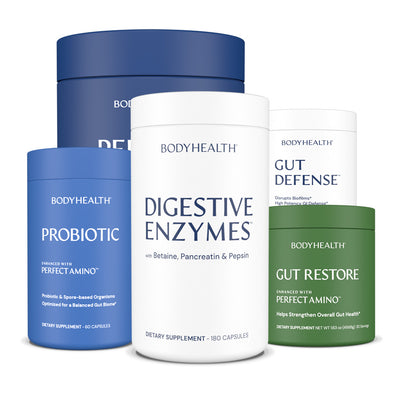
This is where Digestive Enzymes becomes very important. Taken with meals, they support the breakdown of all major nutrients, helping food move through the digestive process more efficiently and reducing the likelihood of it sitting partially digested in the stomach.
But digestion is not just about enzymes. It’s also about the condition of the digestive tract itself.
The lining of the gut, the balance of the microbiome, and the overall environment in which digestion occurs all play a role in how comfortable and effective digestion is.
When digestion slows and dietary patterns change, this environment can shift.
This is where Gut Restore comes into play. By providing nutrients that support gut integrity and balance, as well as defense against harmful bacteria, it helps create a healthier, more effective gut e that can better handle the changes brought on by slowed digestion.
The microbiome (beneficial bacteria living in our colon) are also impacted. These bacteria play a major role in how food is processed, how nutrients are absorbed, and how the gut communicates with the rest of the body.
When food intake drops and digestion slows, the microbiome environment changes.
This is where Akkermansia+ is very important. Beyond helping to to regulate glucose levels and appetite, Akkermansia helps support gut barrier function and metabolism, adding support to the effect of the GLP-1.
And then we have protein. And this is this largest factor to think with when taking GLP-1s. The stomach’s most important job is breaking down protein into the amino acids our body needs in order to them form new proteins for muscle, bone, skin and much more.
And this is one of the most noticeable effects of taking GLP-1s. As the digestive ability lowers we get less amino acids from the protein we eat and we start to lose muscle and bone density over time, our skin can start to sag or get patchy and our energy levels can drop.
PerfectAmino is key here.
PerfectAmino provides amino acids in their already broken-down form, it doesn’t rely on digestion like whole proteins. This allows us to get our cells the amino acids they need to make new protein for the body and maintain strength, bone density and skin.
And it does so without the caloric impact of other proteins, further supporting your goals.
And lastly, Multi Complete contains every vitamins our bodies need in natural and bioavailable forms for easy fast absorption. This is key to replace the vitamins and minerals lost due to poor digestion that our cells need to operate at peak capacity.
Taking each of these can significantly help someone keep their strength and overall health while on their on their GLP-1 journey.
We hope this helps.







*These statements have not been evaluated by the Food and Drug Administration. These products are not intended to diagnose, treat, cure, or prevent any disease.